Neelay RanjanGenerative modeling for domains where labels are scarce and mistakes are expensive.
NASA Ames Research Center · Regenstrief Institute · Purdue University
I build generative models for domains where labeled data is scarce and a wrong prediction costs more than a missed one. My first-author paper on label-efficient vessel segmentation from catheter angiograms is in preparation. At NASA Ames I work on airspace coordination and a synthetic dataset for air traffic control speech; at Regenstrief I trained the diffusion model behind that paper. I also built a 553 KB chess engine; you can play it further down this page. I'm on a gap semester from my AI degree at Purdue, applying to master's programs for fall 2027.
Research
In my first-author paper, in preparation with Shantanu Dev and Andrew Gonzalez at Regenstrief Institute, I trained a diffusion model to predict the clean segmentation mask directly instead of the noise. It reaches 0.882 Dice from 16 labels, ahead of five baselines in 25 of 25 paired runs. Trained the usual way, predicting noise, the same architecture stays near 0.23 Dice at every budget.
The same model made a surgeon ~75% faster at correcting its output.
x axis is log-spaced. budgets 16 (5%), 32 (10%) and 80 (25%) labels of the 320 training images.
y axis clipped at 30%. the tail is the whole finding.
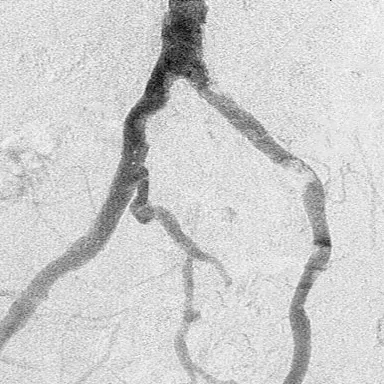
test image 196
Dice 0.939
Dice 0.463
Dice 0.759
curve: every test prediction at 16 labels, 2,500 per model. panels: seed-1, fold-1 re-run at the same budget.
I also led the PCB design team for a helical antenna for electromagnetic field stimulation in Alzheimer’s disease therapy; we presented it as an oral at IEEE MWSCAS 2026 in Cincinnati on August 11.
NASA Ames Research Center
On SLAAC, space launch and air/airspace coordination, I trained a diffusion model on FAA radar tracks to reroute flights around closed airspace. It learns what routes look like offline and applies the airspace while it samples, so a new closure needs no retraining. A reroute has to come back as an ordered list of named fixes a controller would accept, and the operator chooses how far ahead it may look; the figure below has both settings.
Since August I’ve been on SHIFT: speech-to-text for air traffic control that makes fewer errors than the Whisper system in use, and a generate-and-rank parser that turns the transcripts into a maneuver database. I’m writing the parser up with NASA as an extended abstract for AIAA AVIATION.
Live systems
Both demos below run the trained models in your browser.
Experience
References
- Bootstrapping surgeon labeling campaigns with x0-diffusion (in preparation)
- N. Ranjan, S. Clarke, et al., “Generate-and-rank extraction of air traffic control clearances into an en route ontology,” extended abstract for AIAA AVIATION 2027 (in preparation)
- F. Perez, J. Morisaki, H. Kanakri, M. Rizkalla, et al. (incl. N. Ranjan), “Helical Antenna for Electromagnetic Field Stimulation in Alzheimer’s Disease Therapy,” IEEE MWSCAS 2026 (oral)
- Resume
- GitHub
- ORCID
- Supplementary material
The background is the sky over NASA Ames.